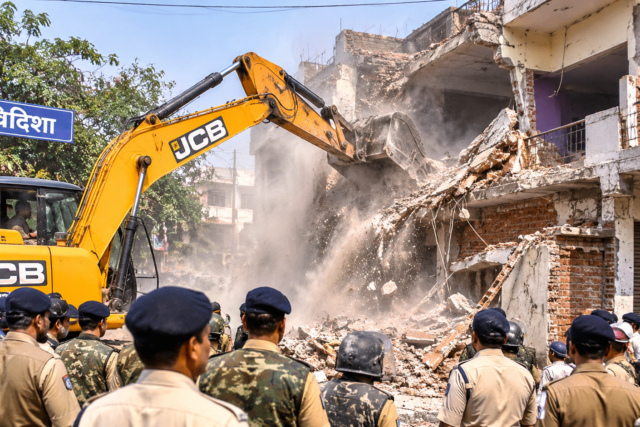

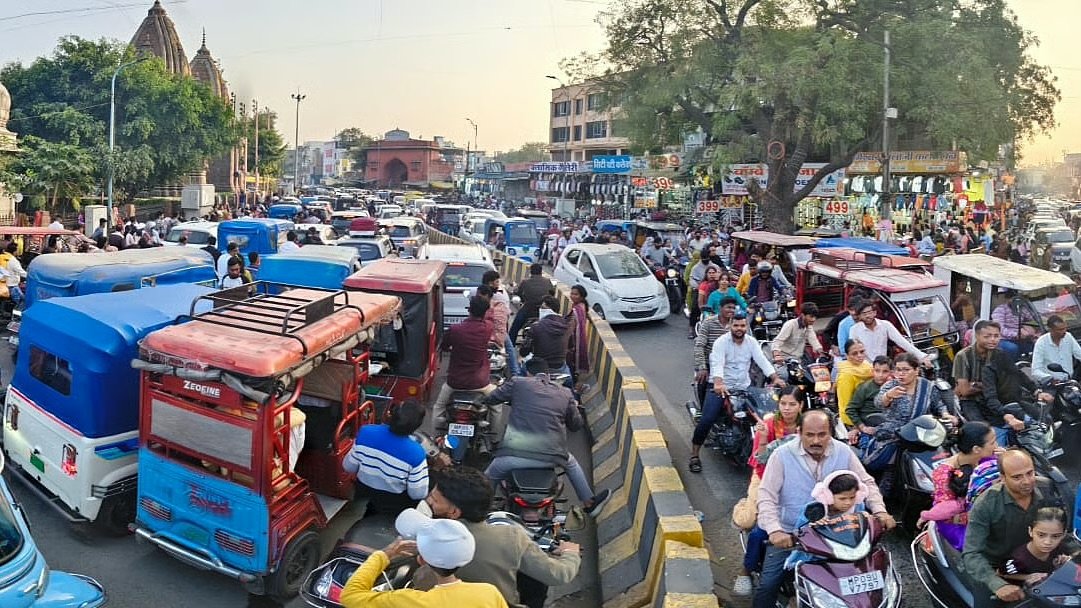
INDORE: The district administration has banned the operation of e-rickshaws on three major routes in Indore, citing persistent traffic congestion and concerns over road safety. The restrictions came into force with immediate effect.
The administration said traffic congestion on key roads had been causing inconvenience to commuters, students, traders and other road users, prompting the need for stricter traffic management measures.
The restrictions were proposed at a meeting involving traffic police officials, the Regional Transport Officer (RTO) and representatives of e-rickshaw operators on October 15. Subsequently, the Deputy Commissioner of Police (Traffic) submitted a report to the district administration on October 19.
Acting on the report, the Collector issued the order under Section 115 of the Motor Vehicles Act, 1988, and Rule 215 of the Madhya Pradesh Motor Vehicles Rules, 1994.
The administration said the restrictions could be modified in the future based on feedback from government departments and citizens.
Four-zone system failed to deliver
The latest move comes after an earlier attempt to regulate e-rickshaw movement failed to produce the desired results.
In April 2026, the traffic police and district administration had divided the city into four zones — blue, yellow, red and white — introducing designated routes, route numbers and colour-coded stickers for e-rickshaws.
However, the system could not be effectively enforced, with several drivers allegedly continuing to operate outside their designated routes.
More than 12,000 e-rickshaws on city roads
With more than 12,000 e-rickshaws operating on city roads, their growing numbers have emerged as a traffic management challenge.
Officials and commuters have raised concerns over their relatively slow movement, which can disrupt traffic flow on busy roads. Haphazard parking of e-rickshaws along roadsides and at major intersections has further aggravated congestion.
BRTS-era restrictions make a comeback
The administration’s decision is reminiscent of restrictions imposed during the initial rollout of the Bus Rapid Transit System (BRTS).
At the time, the then Collector had prohibited city vans, Nagar Seva vehicles and Magic vehicles from operating on AB Road, allowing only city buses among these public transport services.
The latest restrictions follow a similar approach, with the administration seeking to reduce the number of vehicles competing for road space on key corridors.
On the Super Corridor, the e-rickshaw ban is also intended to minimise the risk of accidents involving high-speed vehicles.
Rickshaw union opposes move, seeks ban on city buses
The decision has drawn opposition from e-rickshaw operators. Rajesh Bidkar, president of the Rickshaw Union, argued that the administration should restrict city buses instead, claiming that their larger size also contributes to traffic congestion.
The union’s response has brought the competing interests of public transport operators into focus, even as the administration maintains that the restrictions are necessary to improve traffic movement and road safety.